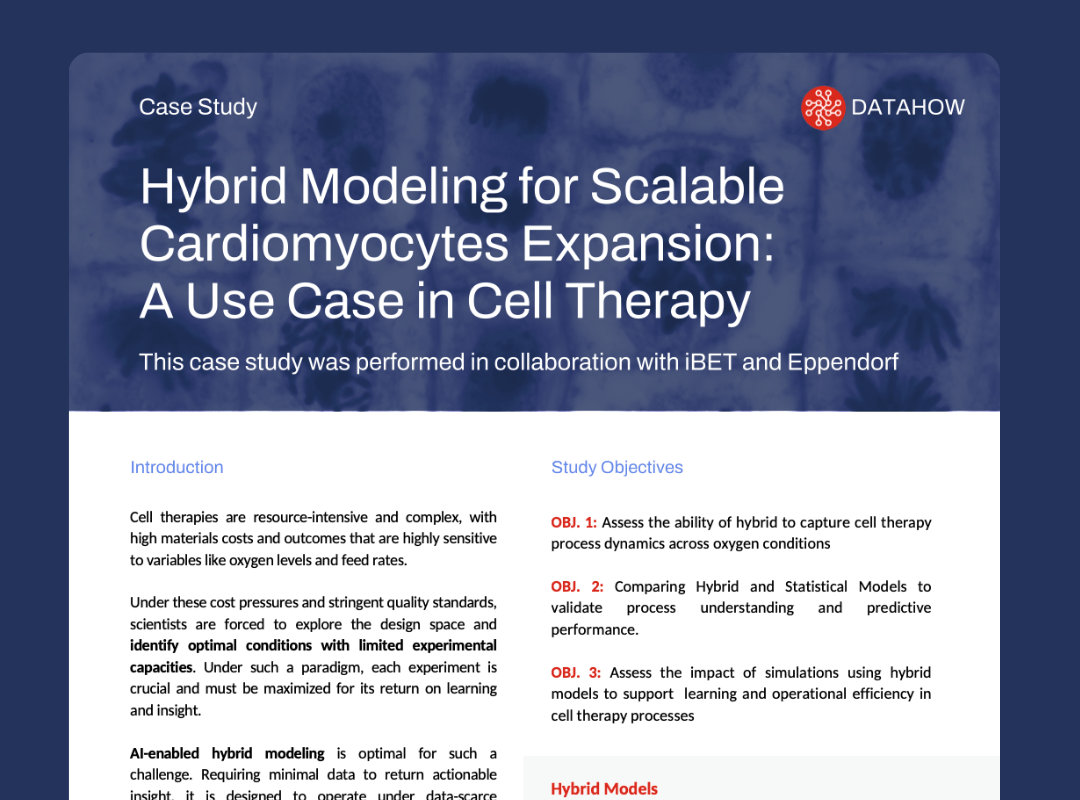
Hybrid Modeling for Scalable Cardiomyocytes Expansion: A Use Case in Cell Therapy
In this collaboration with iBET and Eppendorf, the hybrid model was used to simulate multiple scenarios, identifying an optimal combination of feed and DO to maximize growth while minimizing media consumption.
Read the full case study to learn what made this possible.
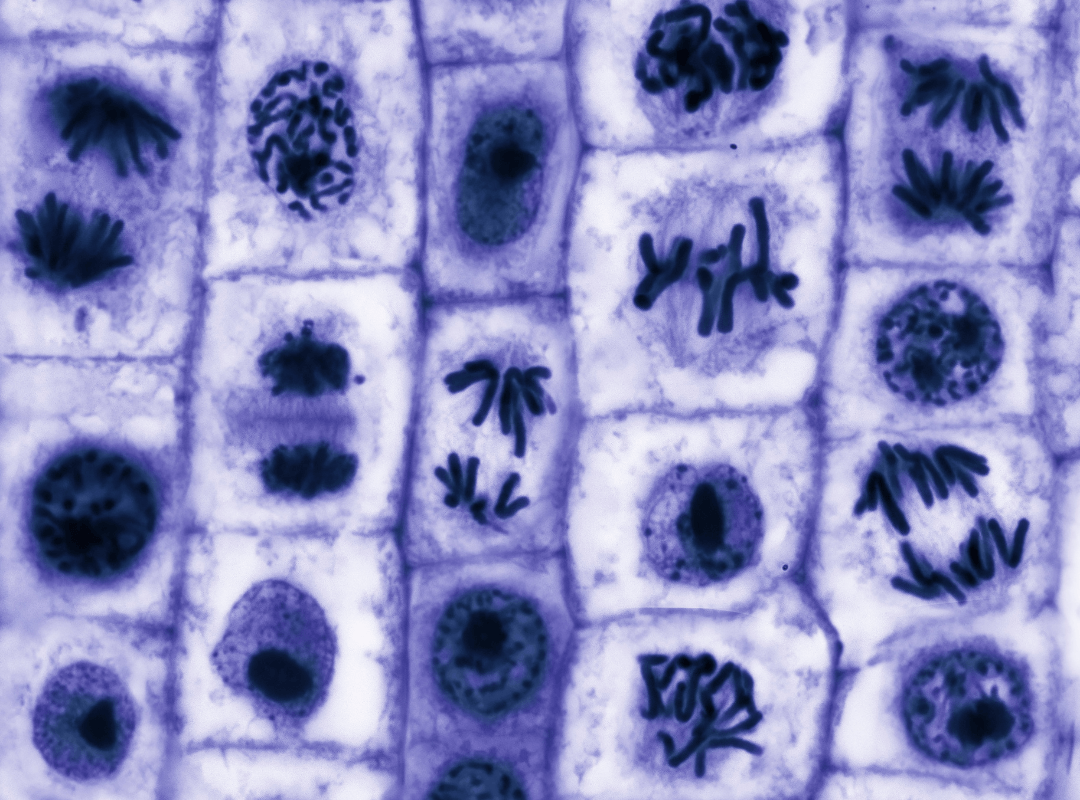
Challenge
Cell therapies represent a frontier in medicine, yet they remain resource-intensive and highly complex. High material costs and process outcomes that are extremely sensitive to variables like feed rates and dissolved oxygen (DO) levels create a difficult environment for optimization.
Under these cost pressures, scientists must often identify optimal conditions with very limited experimental capacity. Because every experiment is crucial, the industry requires a modeling approach that maximizes the “return on learning” from every run. AI-enabled hybrid modeling is designed specifically for these data-scarce conditions.
Objectives
OBJ. 1: Evaluate the model’s ability to capture complex process dynamics across different oxygen conditions.
OBJ. 2: Compare hybrid and statistical models to validate process understanding and predictive performance.
OBJ. 3: Assess the impact of using hybrid model simulations to support operational efficiency and experimental planning.
Should you wish to further explore the case with the DataHow team, please contact us directly.